



A new coal-fired power plant in southern Mong Hsat, 19 kilometers from the Thai border adjoining Mae Fah Luang district of Chiang Rai province, is set to worsen heavy metal contamination of the Kok River.
The power plant, owned by the United Wa State Army (UWSA), began operation in November 2025. It is located about ten kilometers south of Mong Hsat town, across the Kok River from Wan Hoong village tract, established as the first headquarters of the southern UWSA in 1997. The plant currently powers the UWSA’s military base, training school, and factories producing weapons and rubber in Wan Hoong.
Plans to build the power plant were first publicly reported in May 2020, when Burmese government officials visited the site. The developer was named as Wan Hong Natural Energy Co. Ltd., and the plant was slated to have a capacity of 30 megawatts, which would be transmitted to Tachileik via Wan Hoong.
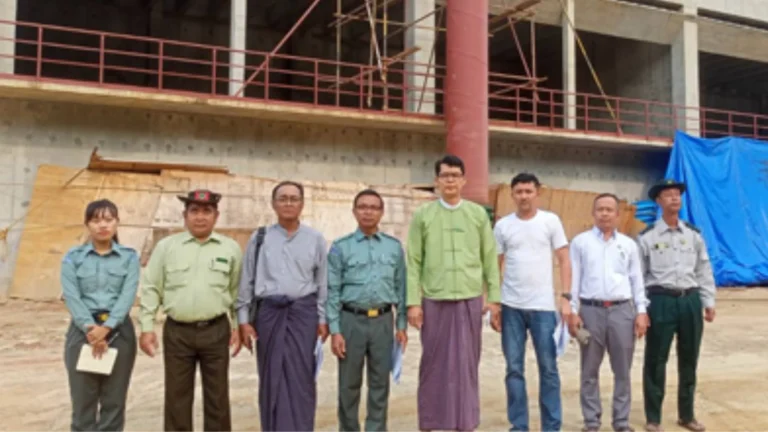
Locals say that about 150 workers built the power plant. Most of the workers were Burmese, with Chinese technicians overseeing the construction.
Coal for the plant is sourced from a new open-pit mine 35 kilometers southwest of the power plant near Na Pa Kao village, Mae Ken tract, in the hills of eastern Mong Ton township, opposite Fang District, Chiang Mai province of Thailand. According to local villagers, large 10-wheel trucks are transporting coal “day and night” to the power plant. Villagers living along the Mae Ken stream below the mine report that they are developing itchy rashes from using the water, and fish are starting to die. The Mae Ken stream flows into the Hang River, a tributary of the Salween River.
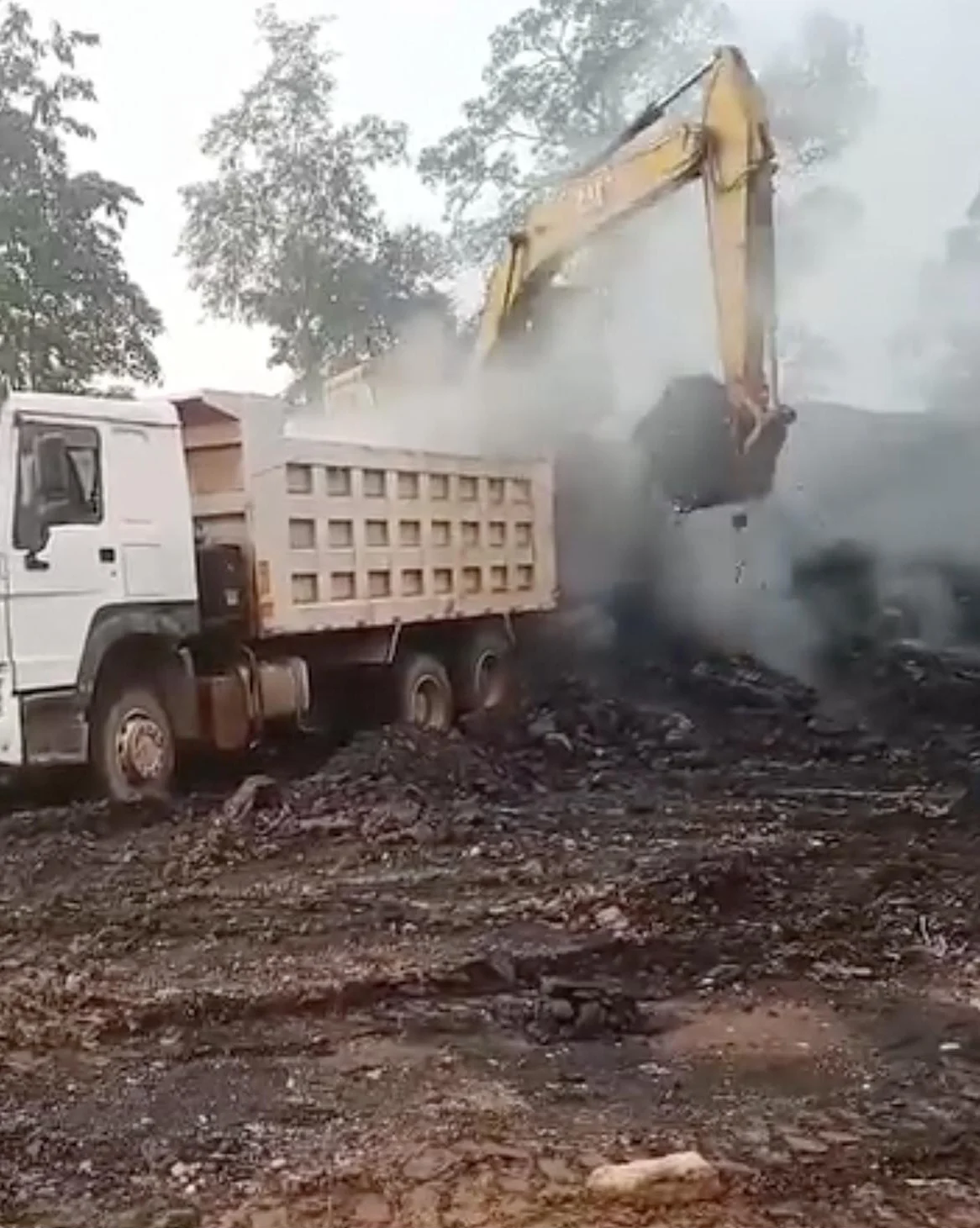
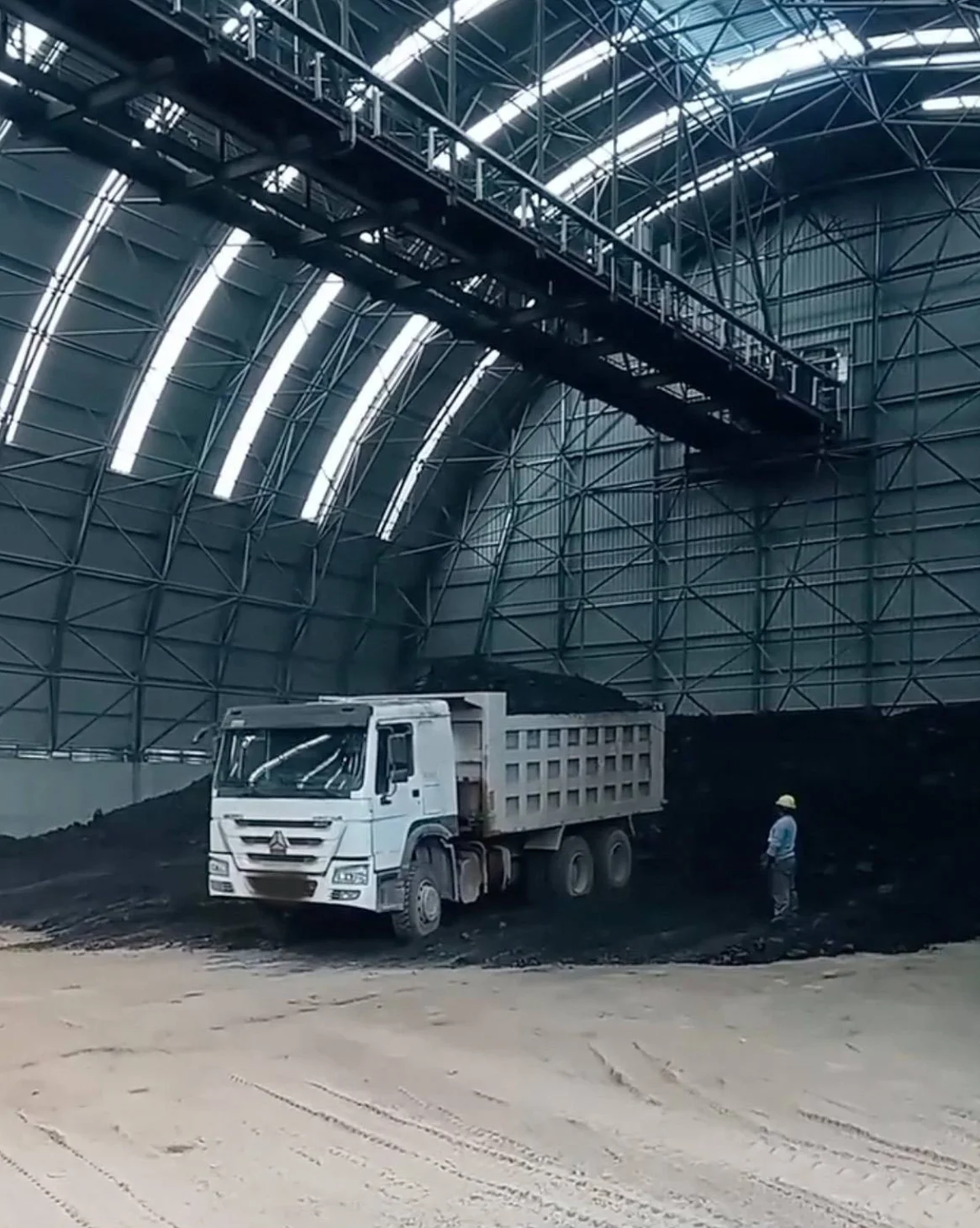
The immediate concern about the power plant is the toxic emissions from burning of coal, containing sulfur dioxide, nitrogen oxide and particulate matter (including heavy metals), which will directly affect local people’s respiratory health, as well as causing acid rain, threatening vegetation within a radius of 80 plus kilometers.
Wan Hoong villagers report that they can smell the coal fumes from the plant when going outside their homes.


However, another impact that will escalate over time is the runoff from piles of coal and fly ash (produced from the burning of coal) stored near the power plant, which will flow into the Kok River. Fly ash contains heavy metal contaminants including mercury, lead and arsenic.

A recent satellite image from March 10, 2026, shows that an area north of the power plant, towards the Kok River, is being used to store what appears to be coal. The image also shows many solar panels next to the plant, confirming local reports that it will be a hybrid coal and solar power plant.
Apart from the new Wan Hoong power plant, there is only one other large operational coal-fired power plant in Burma, which is the Tigyit power plant in Pinlaung township, southern Shan State, operated by China’s Wuxi Huaguang Electric Power Engineering Co. Ltd. The Tigyit power plant, located next to a large open-pit coal mine, started operation in 2005 and has a capacity of 120 megawatts of electricity.
A report by the Pa-O Youth Organisation in 2011 exposed how air and water pollution from the Tigyit coal mine and power plant was threatening the agriculture and health of nearly 12,000 villagers living within a 5-mile radius of the mine, and that 50% of local people were suffering skin rashes.
The PYO report also revealed that 100-150 tons of toxic fly ash waste was being produced daily by the Tigyit coal fired power plant, runoff from which was flowing into the Balu Creek, and then into Inle Lake.
Wan Hoong was originally populated by about 200 ethnic Shan households, but during 1999-2001, after being established as the southern UWSA headquarters by Wei Xuegang, over 24,000 villagers from the northern Wa territory were forcibly resettled into Wan Hoong and nearby areas, completely changing local demographics. Over 126,000 Wa villagers from the north were forcibly resettled to the southern townships of Mong Ton, Mong Hsat and Tachileik during this time.
Earlier attempts by UWSA to set up a coal fired power plant in southeast Shan State were thwarted by communities across the border in Thailand concerned about air pollution. In 2000, UWSA’s Hong Pang company reached an agreement with the Burmese military regime to set up a 12-megawatt coal-fired power plant north of Tachileik. However, due to opposition from residents of the adjacent Thai town of Mae Sai, who physically blocked trucks carrying construction equipment (of Chinese origin) from Thailand in April 2001, the plant was cancelled.

Download Full Report (PDF)
Download (English – PDF, 2.6 MB)
Download (Burmese – PDF, 2.6 MB)
Signal Contact

Sai Hor Hseng
(English & Shan)

Ying Leng Harn
(Burmese)

Ying Hom
(Thai)