June 4, 2026
6 mins read

China and Russia vie for tungsten deposits around Loi Khi Lek, the highest mountain in Mong Ton township

China and Russia vie for tungsten deposits around Loi Khi Lek, the highest mountain in Mong Ton township

June 4, 2026

A Chinese company, in cooperation with the United Wa State Army (UWSA), has recently operationalized a large tungsten mine south of Loi Khi Lek mountain in Mong Ton township, while a Russian company, jointly with the Naypyitaw regime, is about to start tungsten excavation on the northern slopes of the same mountain, which lies about 20 kilometers from the Thai border.

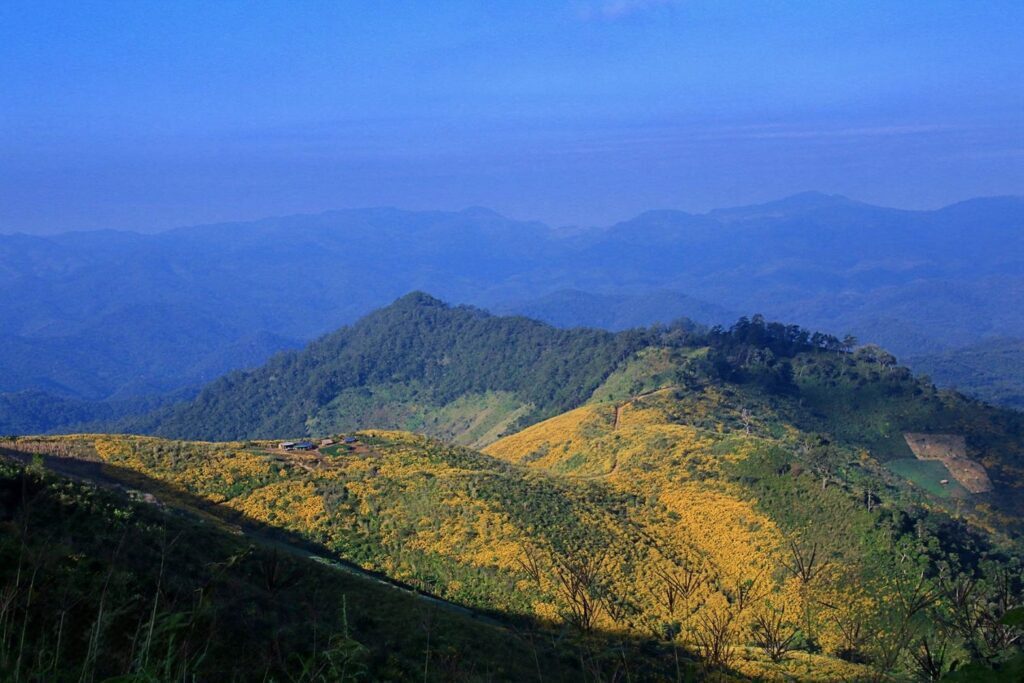
Loi Khi Lek mountain is the tallest peak in Mong Ton township, at 1,970 meters above sea level. “Khi Lek” in Shan means “mineral residue”.

Loi Khi Lek mountain

New Chinese tungsten mine impacting local villagers’ health and farming livelihoods

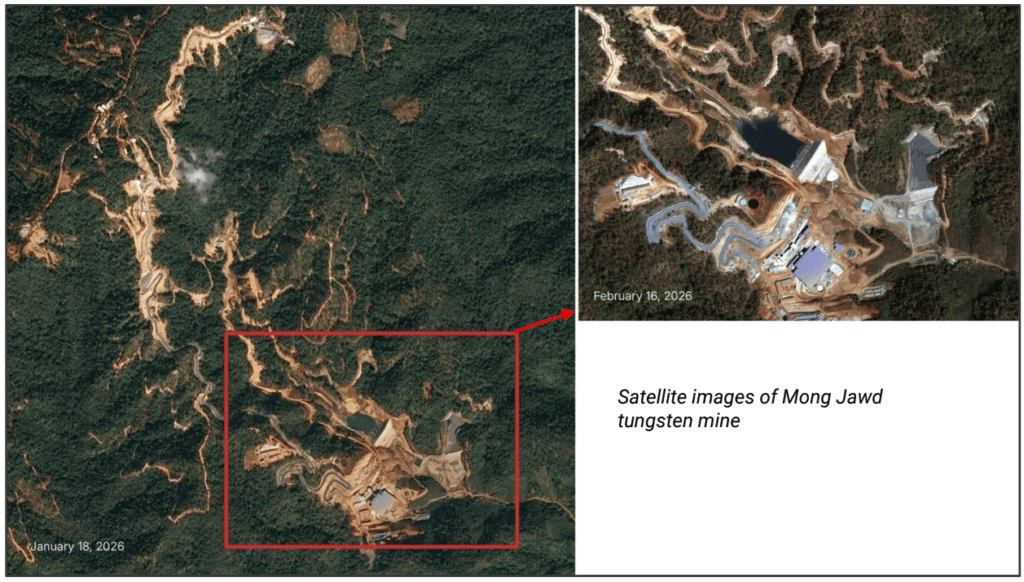
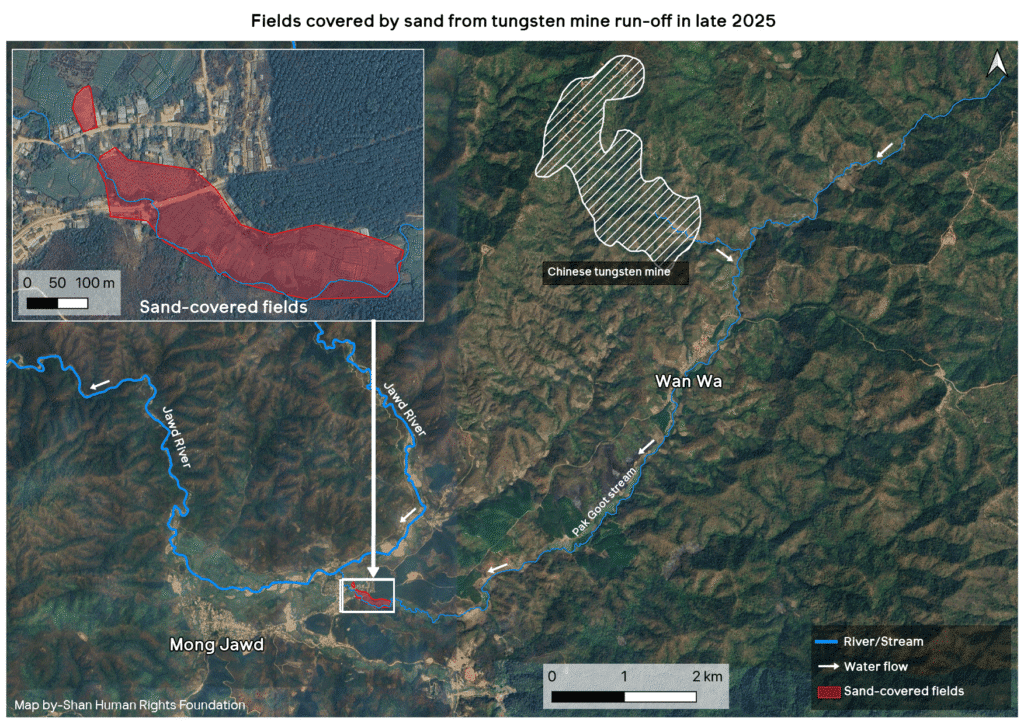
The large new Chinese tungsten mine, which lies in Mong Jawd tract, started production in February 2026, and is already impacting the health and farming livelihoods of villagers living downstream of the mine.

Preparation for the mine was first noticed by locals in 2022, when Chinese engineers were seen going to survey at the site. During 2023 and 2024, roads were built up to the site and tunnels dug into the ground. During 2025, processing facilities were built at the lower end of the 3-kilometer-long site, and a water storage dam was completed on the Pak Goot stream.

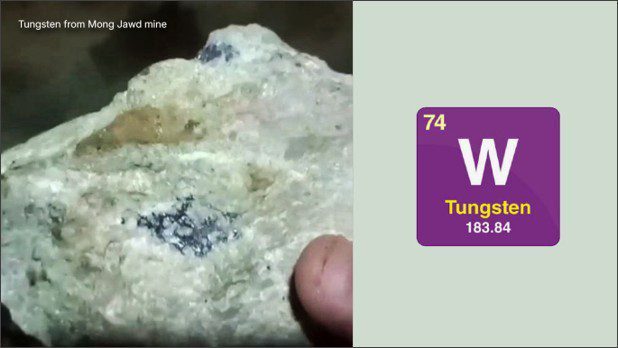
Tungsten (wolfram) is a critical mineral in high global demand due to its unique properties of extreme hardness and density, with the highest melting point of any metal

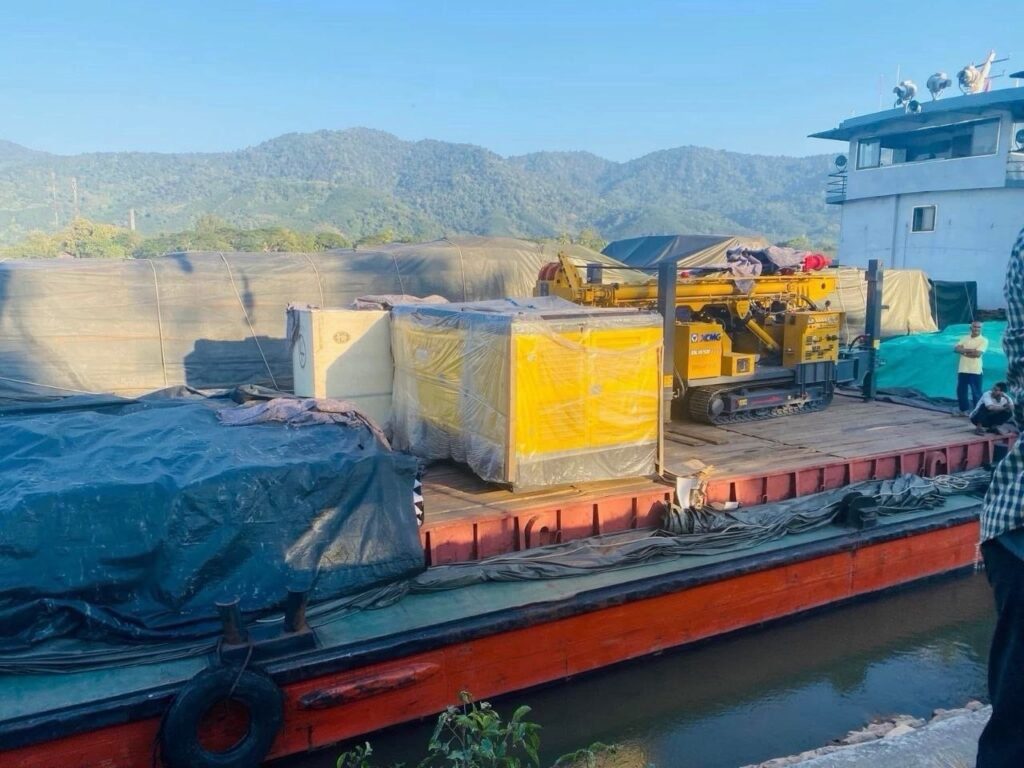
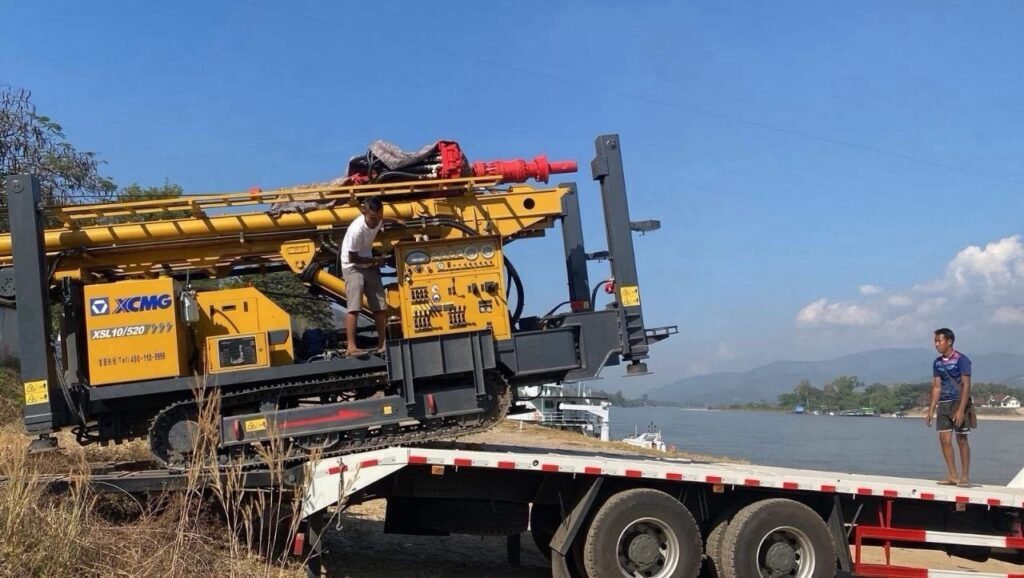
Mining equipment and machinery have been shipped from China along the Mekong River to the Wan Pong port east of Tachileik, and then transported by truck via Wan Hoong in Mong Hsat township and Na Kong Moo village tract in Mong Ton township to the Mong Jawd mine. Wan Pong port is Burma’s main international customs gateway on the Mekong River, opposite Bokeo province of Laos, close to the Golden Triangle Special Economic Zone.

Mining equipment being unloaded at Wan Pong port on the Mekong River
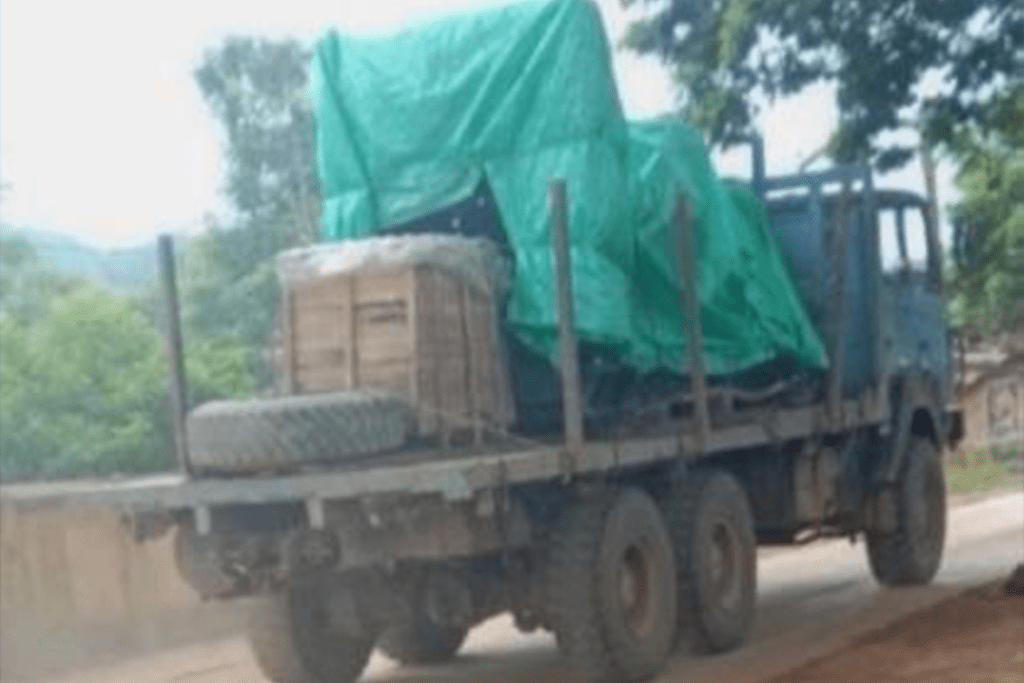
Truck carrying mining machinery to Mong Jawd mine

There are about 100 Chinese mining company staff – mostly managers and technicians — and about 250 Shan and Bama mine workers at the site. The basic salary for the workers is 300,000-500,000 kyat (75 to 125 USD) per month. Backhoe drivers earn 100-300 baht (3 to 9 USD) per hour, and the underground miners can earn 200-400 baht (6 to 12.5 USD) for each load of rock collected from inside the tunnels. 

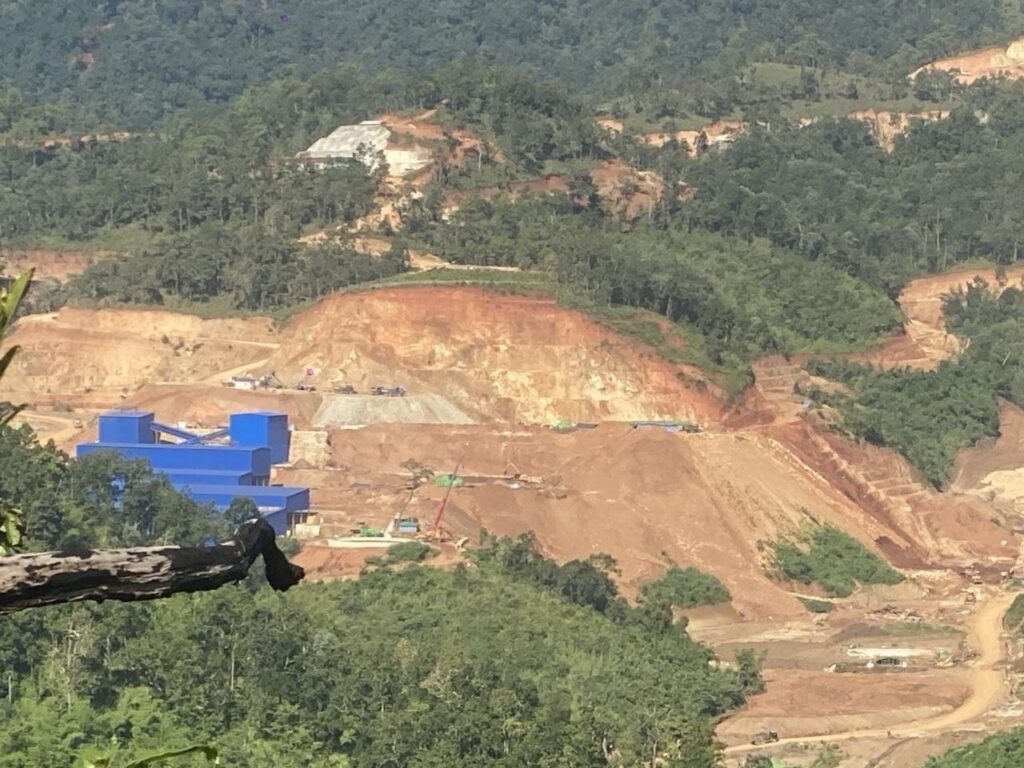
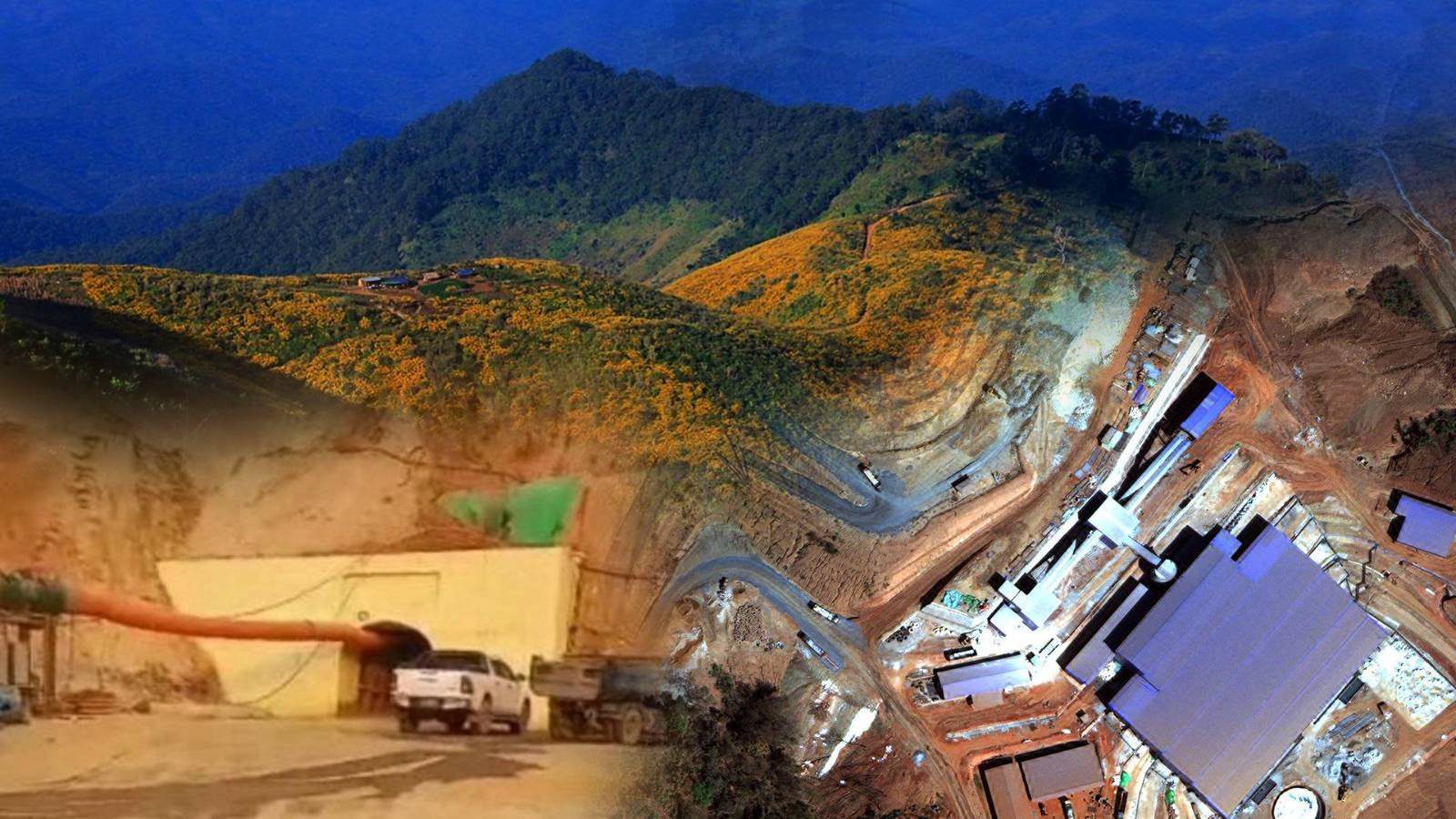
Mong Jawd tungsten mine
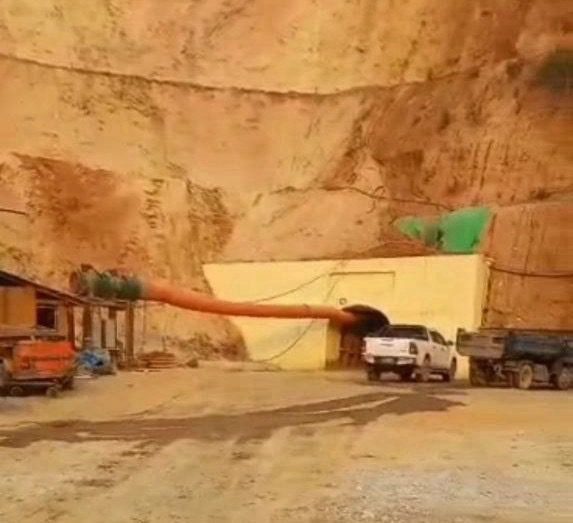
Tunnel at the Mong Jawd tungsten mine

The mined rock containing tungsten is crushed, then ground and chemically separated into tungsten powder at the site. The powder is put into sacks, which are then transported by truck to China.

Tungsten started being transported from the mine after the Chinese New Year in February this year. It has been transported in convoys of covered 12-wheel trucks, usually about five vehicles at a time, to the Chinese border at Mong La via Tachileik and Mong Phyak, which are controlled by the Burma Army.

While tungsten is the main mineral being extracted, locals have heard that gold and lead deposits have also been discovered at the site.

The mine lies on the southern edge of the Loi Khi Lek mountain range, six kilometers northeast of Mong Jawd village. The closest village to the mine is Wan Wa, which is situated on the Pak Goot stream about one kilometer from the lowest end of the mining site and therefore most directly impacted by mining runoff. Since 2025, local sources say that children living in Wan Wa have developed skin infections from contact with the Pak Goot stream water.

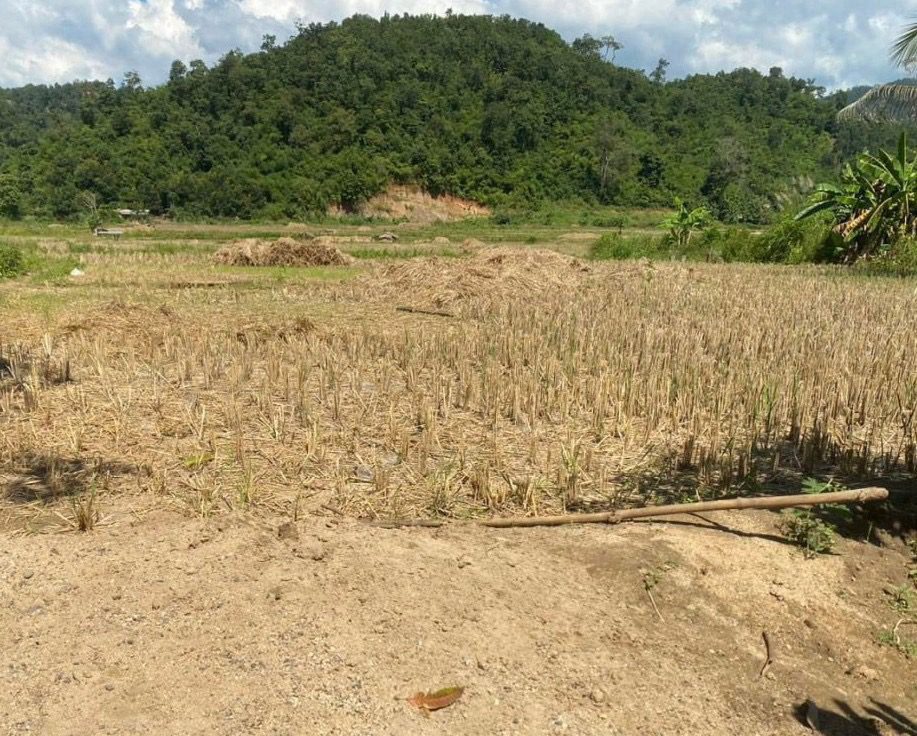
At the end of the rainy season in 2025, sandy sediment from mining run-off flooded over rice fields along the lower end of the Pak Goot stream, near Mong Jawd, making them uncultivable.

Fields covered with sand from mining run-off near Mong Jawd

After completion of the storage dam at the mine at the end of 2025, the waters of the Pak Goot stream were used to fill the reservoir, making the stream dry up below the dam, and impacting villagers relying on this water source for household and agricultural needs.

The Pak Goot stream joins the Jawd River, which flows northward into the Salween River. Now that the mine is fully operational, there are concerns that contaminated runoff from the mine —  whether heavy metals from the excavated soil or chemicals from the processing facilities — will not only impact villagers living along the Pak Goot stream and Jawd River, but also those living along the Salween.

Tungsten (wolfram; chemical symbol = W) is a critical mineral in high global demand due to its unique properties of extreme hardness and density, with the highest melting point of any metal. It is used in industries such as aerospace, electronics, defense, and mining, either in pure form or as part of a compound like tungsten carbide.

China currently dominates world production of tungsten. In 2025, 67,000 tons of tungsten were produced in China, nearly 80 percent of total annual tungsten production worldwide.

Historically, the main source of tungsten in Burma was the Mawchi mine in Karenni State, where tungsten continues to be mined to this day. In Shan State, the last publicly available list of official Burmese mining permits, issued in November 2021, mentioned three townships where tin-tungsten permits had been granted: Pekhon, Ywangan and Mong Ton. However, the permit for Mong Ton was not for the Mong Jawd area, but for Mong Kang tract in the north of the township, where Pyae Phyo Kywet company was granted a permit to mine in three 49.5-acre sites from November 2018 to May 2019. The tin-tungsten excavation permits in Shan State were all granted to domestic companies, but a survey permit (valid from December 2017 to December 2021) had been issued to China’s state-owned Southern Nonferrous Metal Company to search for tin-tungsten in a 2,488-acre area south of Thikyeik in Pekhon township.

The Burmese mining permit list did not include the Man Maw tin-tungsten mines in the northern UWSA area (about ten kilometers east of the Salween River), as these are outside Naypyidaw jurisdiction. These mines have over the past 15 years mainly been excavated for tin (chemical symbol = Sn), which has all been exported to China. The Man Maw mines have been a major global source of tin, contributing to Burma’s ranking in 2023 as the world’s second largest tin producer, producing 54,000 metric tons of tin.

Mong Jawd was originally a small village of about fifty Shan, Lisu and Lahu households, mostly farmers growing rice, sesame and garlic. In 1994, the Burma Army seized the Mong Jawd area from the Mong Tai Army (MTA), and later allowed the UWSA to set up bases there. During 1999-2001, over 14,000 Wa villagers (out of a total of over 126,000 villagers resettled from the northern UWSA area) were relocated to the southern Mong Ton area, including Mong Jawd. Large tracts of hillsides surrounding Mong Jawd were then cleared for rubber plantations. Most of the original Mong Jawd villagers have fled to Thailand. 
The village of Mong Jawd is under joint UWSA and Burma Army control. The UWSA’s Brigade 772 – one of five brigades under the UWSA’s 171 Southern Region — is based at Mong Jawd, where it runs a large military training camp. The Burma Army camps are under the Triangle Regional Command.

Russia preparing for tungsten excavation north of Loi Khi Lek mountain

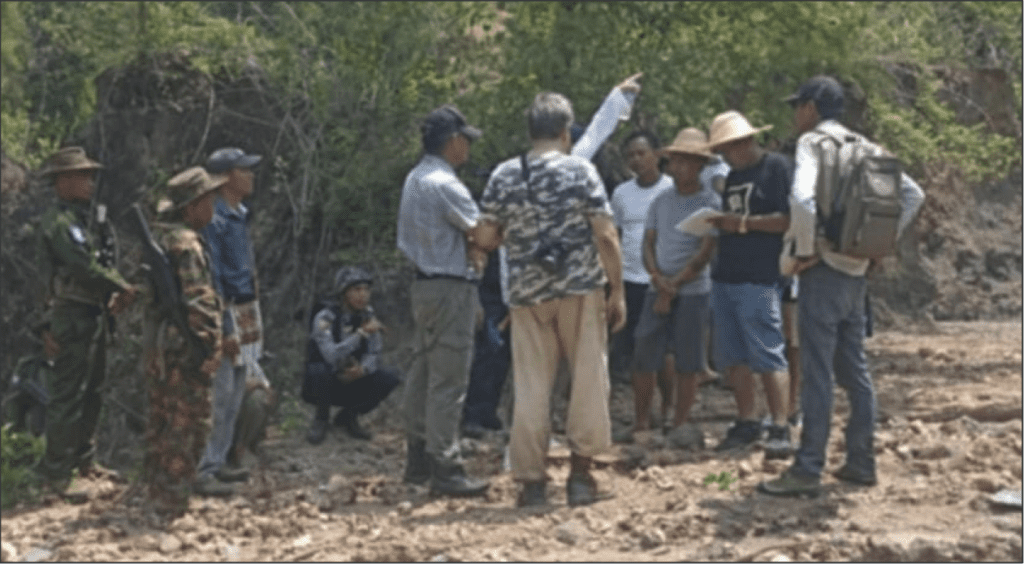
In May 2025, local villagers saw three Russians come to survey for minerals on the northern slopes of Loi Khi Lek mountain, accompanied by Burma Army soldiers, police and local militia.

Russians visiting Loi Khi Lek area, with armed Burma Army, police and militia in May 2025

On January 28, 2026, about ten Russians again visited the Loi Khi Lek area together with the Mong Ton Burma Army commander, and were seen measuring the land. Some local leaders of nearby villages were invited to meet them, and were informed that a permit had already been granted by the Naypyitaw regime to the Russians to mine for tungsten in the area.

Shortly after this, a local UWSA administrator from Huay Aw (the southern UWSA headquarters), told local villagers that they should oppose the Russian mining project.

Locals say that Russians have also received a concession to mine for antimony about fifteen kilometers northeast of the planned tungsten mine. These will be the first known Russian mining projects in eastern Shan State. However, Russia has long been involved in mining in southern Shan State, where in 2004 Russia’s state-owned Tyazhpromexport (TPE) entered into a joint venture with the military-owned Myanmar Economic Corporation to excavate iron and set up a steel plant at the Pinpet mountain in Hopong township. This iron mine and factory have been strongly opposed by local communities for their social and environmental impacts, and have faced many delays, but a visit by Russian technical experts to the site in May 2025  showed that Russia and the Burmese regime remain committed to operationalizing the project.

Contacts:

 Signal

Go toTop